
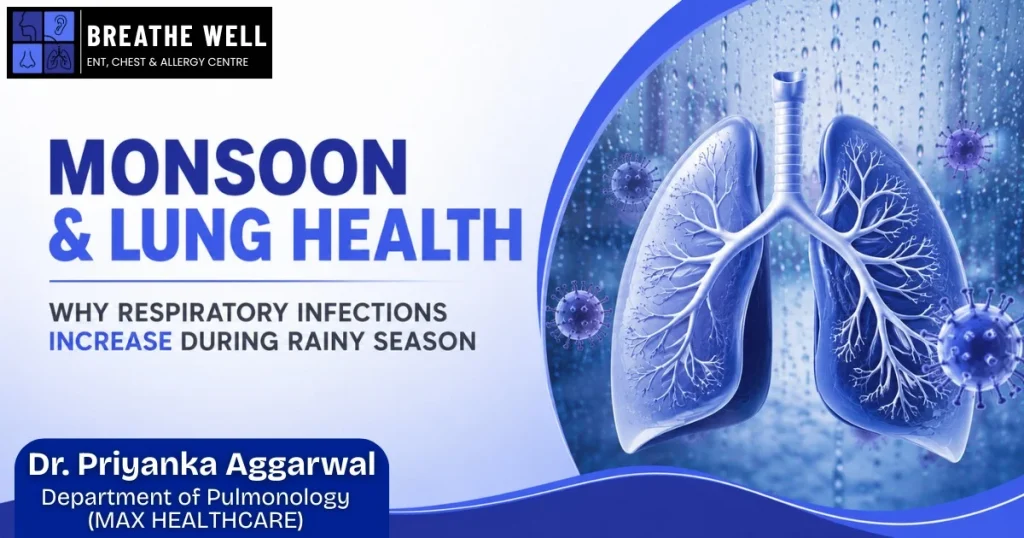
The rainy season brings welcome relief from the summer heat, but it also brings a rise in coughs, colds, breathlessness and chest infections. Many people in India notice that their breathing problems get worse once the monsoon starts. If you or someone in your family faces repeated respiratory issues during this time, consulting Dr. Priyanka Aggarwal, Best Pulmonologist in Noida can help you understand the reasons and take the right steps early.
Why Do Lung Problems Increase in Monsoon?
During the rainy season, the air becomes heavy with moisture. High humidity creates the perfect environment for viruses, bacteria and fungi to grow and spread. When we breathe this damp air, our respiratory tract becomes more vulnerable.
Rainwater collects in open drains, puddles and poorly cleaned areas. These stagnant water spots become breeding grounds for mosquitoes and also release harmful microbes into the air. When the wind blows or when we walk through such areas, we inhale these germs. People with weak immunity, asthma, COPD or allergies feel the effects more strongly.
Another common problem is the sudden temperature change. Going from a cool air-conditioned room into the humid outdoor air or the reverse, irritates the airways. This irritation makes it easier for infections to take hold. Dust and pollen that get mixed with rainwater can also trigger allergies and asthma attacks.
Indoor air quality often suffers during monsoon too. Damp walls, wet clothes hanging inside and closed windows reduce fresh air circulation. Mould can grow on walls and furniture, releasing spores that cause coughing, wheezing and sinus problems.
Common Respiratory Infections Seen in Rainy Season
- Viral infections such as the common cold and flu become more frequent.
- Bacterial infections like bronchitis and pneumonia can develop if a simple cold is ignored.
- Fungal infections may affect people with weakened lungs or those on long-term medicines.
- Asthma and allergic rhinitis often flare up because of increased allergens and humidity.
- People with COPD may experience more frequent exacerbations (sudden worsening of symptoms).
Children, elderly persons and those with existing lung conditions need extra care during this period.
Simple Ways to Protect Your Lungs During Monsoon
You do not need complicated routines. Small, consistent habits make a big difference:
- Keep yourself dry. Change wet clothes immediately and dry your feet properly.
- Maintain good hygiene. Wash hands often and avoid touching your face.
- Improve indoor air. Use exhaust fans, open windows when it is not raining heavily and clean damp corners regularly.
- Stay hydrated and eat warm, nutritious food to support immunity.
- Avoid walking through flooded areas or standing water.
- If you have asthma or COPD, continue your regular medicines and keep your inhaler handy.
- Get vaccinated against flu if your doctor recommends it.
- Seek medical help early if you develop persistent cough, fever, chest pain or shortness of breath.
At Breathe Well Centre, Dr. Priyanka Aggarwal and her team focus on clear diagnosis and practical advice so that patients can manage their lung health confidently throughout the year, including the challenging monsoon months.
When Should You See a Doctor?
Do not wait if symptoms last more than a few days or keep returning. Warning signs include:
- Cough lasting more than a week
- Difficulty breathing or wheezing
- High fever with chest discomfort
- Thick yellow or green sputum
- Feeling unusually tired or breathless while doing normal activities
Early treatment prevents simple infections from becoming serious.
Conclusion
Monsoon need not mean endless coughing and breathing trouble. Understanding why respiratory infections rise during the rainy season helps you take timely precautions. With proper care, most people can enjoy the rains without major lung issues. If you are looking for reliable guidance on lung health, visit Breathe Well Centre and consult the Best Pulmonologist Near you in Noida, Dr. Priyanka Aggarwal for personalized advice and treatment.
Frequently Asked Questions
High humidity and sudden temperature changes weaken the body’s natural defences in the nose and throat, making it easier for viruses to enter and cause infection.
Yes. Increased mould, dust mites and humidity often act as triggers for asthma and allergic conditions, leading to more frequent attacks.
Pneumonia can occur any time, but the higher number of viral and bacterial infections during monsoon increases the risk, especially in children and older adults.
Wipe wet surfaces daily, ensure good ventilation, fix any water leakage and use a dehumidifier if needed. Avoid drying clothes indoors for long periods.
Yes. They should continue prescribed medicines, avoid crowded damp places, stay dry and contact their doctor at the first sign of increased breathlessness or cough.