
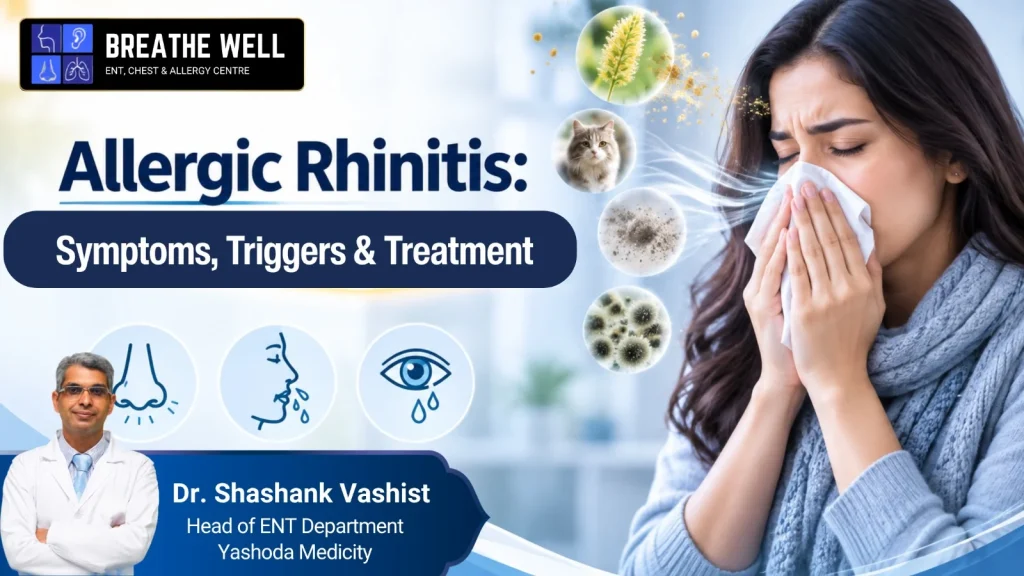
Many people in Noida deal with a constantly runny or blocked nose, frequent sneezing and itchy eyes, especially during certain seasons. These are classic signs of allergic rhinitis, also known as hay fever. If you are searching for relief from ongoing nasal allergies and need guidance from the Best ENT Specialist in Noida, Dr. Shashank Vashist, understanding this common condition helps you take the right steps early.
Allergic rhinitis is not a cold or infection. It is your immune system overreacting to harmless substances in the air, called allergens. The lining of your nose becomes inflamed, leading to the familiar symptoms that can affect sleep, work and daily comfort.
Common Symptoms of Allergic Rhinitis
Symptoms usually appear soon after contact with the allergen. They can be mild or quite bothersome and may last for weeks or months if the trigger stays present.
Typical signs include:
- Frequent sneezing, often in bouts
- Runny nose with clear watery discharge
- Blocked or stuffy nose
- Itchy nose, throat or roof of the mouth
- Watery, red or itchy eyes
- Postnasal drip (mucus dripping down the throat) that can cause cough or throat clearing
- Reduced sense of smell
- Tiredness from poor sleep due to congestion
Some people also notice dark circles under the eyes (allergic shiners) or a crease on the nose from constant rubbing.
Symptoms may be seasonal (mainly spring or autumn) or year-round (perennial), depending on the trigger.
Common Triggers
Allergic rhinitis is triggered by airborne particles that your body treats as a threat. The most frequent ones are:
Outdoor allergens (seasonal):
- Tree pollen (early spring)
- Grass pollen (late spring and summer)
- Weed pollen (especially late summer and autumn)
Indoor allergens (year-round):
- House dust mites (found in bedding, carpets and soft furniture)
- Pet dander from cats, dogs or other furry animals
- Mould spores (in damp areas)
- Cockroach droppings in some homes
Pollution, strong smells, smoke and sudden weather changes can worsen symptoms even if they are not true allergens.
How Allergic Rhinitis Is Diagnosed
A doctor usually diagnoses it from your history and a simple examination of the nose. Pale, swollen nasal lining and clear discharge are common findings. Allergy testing (skin prick tests or blood tests) may be advised if symptoms are severe, long-lasting or not responding to basic treatment. These tests help identify exact triggers so you can avoid them better.
Effective Treatment Options
Most people get good relief with a combination of simple measures and medicines.
1. Avoiding triggers (the foundation of care)
- Keep windows closed during high pollen days and use air conditioning if possible.
- Wash bedding weekly in hot water and use protective covers for mattresses and pillows.
- Vacuum regularly with a HEPA filter and reduce carpets or soft toys where dust collects.
- Keep pets out of the bedroom if you are sensitive to dander.
- Control indoor humidity to limit mould growth.
2. Medicines
- Nasal corticosteroid sprays are the most effective first-line treatment. They reduce inflammation and work best when used regularly.
- Non-drowsy oral antihistamines help control sneezing, itching and runny nose.
- Antihistamine nasal sprays or eye drops can be added for specific symptoms.
- Saline nasal rinses or sprays wash out allergens and mucus and are safe for daily use.
- Short-term decongestant sprays may help severe blockage but should not be used for more than a few days.
3. Immunotherapy (for stubborn cases)
If medicines and avoidance are not enough, allergy shots or tablets under the tongue can gradually train the immune system to tolerate the allergen. This is a longer-term option usually supervised by a specialist.
Practical Tips for Daily Relief
- Start preventive sprays a week or two before your usual allergy season begins.
- Stay hydrated and sleep with your head slightly raised to ease congestion.
- Avoid rubbing your eyes or nose, as this can worsen irritation.
- Track your symptoms and pollen levels if seasonal allergies are the main problem.
Allergic rhinitis is very common and highly manageable. With the right approach, most people breathe more comfortably, sleep better and feel less drained. Early advice prevents complications such as sinus infections or worsening of asthma in those who have both conditions.
If symptoms keep returning or interfere with your daily life, a proper evaluation can make a clear difference. For expert care focused on accurate diagnosis and lasting relief, visit Breathe Well Centre, Best ENT Centre in Noida, under the guidance of Dr. Shashank Vashist, Senior Consultant ENT and Cochlear Implant Specialist, where specialised assessment and personalised treatment plans are available.
Frequently Asked Questions
No. A cold is caused by a virus and usually lasts 7–10 days with thicker mucus and sometimes fever. Allergic rhinitis lasts longer, produces clear watery dischargeand is triggered by allergens rather than infection.
Yes. It is common in children and can affect school performance and sleep. Early management helps prevent later problems such as sinus issues or asthma.
Not always. Many people improve with basic avoidance and nasal sprays. Testing is useful when symptoms are severe, year-round or when planning immunotherapy.
There is no permanent cure for most people, but symptoms can be controlled very effectively. Immunotherapy can reduce sensitivity over time and sometimes bring long-lasting relief.