
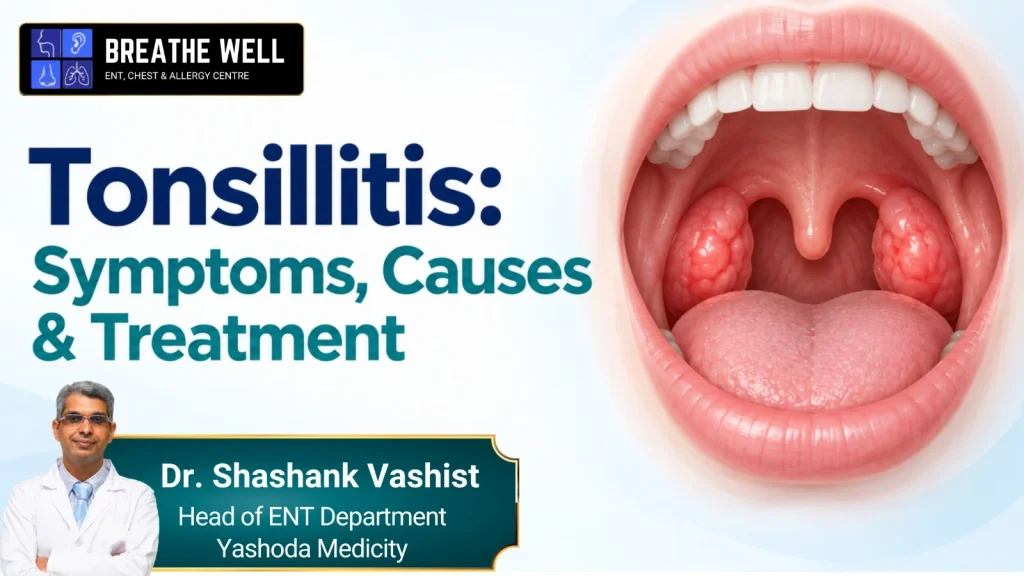
Tonsillitis is inflammation of the tonsils, usually caused by a viral or bacterial infection. It can lead to a sore throat, fever and painful swallowing. Most cases improve with supportive care, while some bacterial infections need antibiotics.Dr. Shashank Vashist, Best ENT Specialist in Noida, this guide explains the symptoms, treatment options and signs that need prompt medical attention.
What Is Tonsillitis?
The tonsils are two small pads of tissue at the back of your throat. They are part of the immune system and help the body respond to germs entering through the mouth and nose.
When the tonsils become infected, they may turn red, swell and feel painful. Tonsillitis is common in children, but teenagers and adults can develop it too. Some people experience an occasional infection, while others have repeated episodes.
Common Symptoms of Tonsillitis
A sore throat is often the first noticeable symptom. Swallowing food, drinking water or even swallowing saliva may become uncomfortable.
Other symptoms can include:
- Red, swollen tonsils
- Fever
- White or yellow patches on the tonsils
- Tender, swollen glands in the neck
- Bad breath
- Headache or ear pain
- Tiredness and reduced appetite
Young children may become irritable, refuse food or struggle to explain where it hurts. White patches alone do not confirm a bacterial infection; they can occur with different infections..
What Causes Tonsillitis?
Viral Infections
Viruses cause most cases of tonsillitis. These include viruses responsible for common respiratory infections. Some people may also have a cough, runny nose or hoarse voice.
Antibiotics do not work against viruses. Treatment focuses on easing discomfort and preventing dehydration while the body recovers.
Bacterial Infections
Bacteria can also infect the tonsils. Group A Streptococcus, the bacteria responsible for strep throat, is an important cause.
A sudden sore throat, fever and painful swallowing without a cough may raise suspicion of strep throat. However, symptoms alone cannot always distinguish it from a viral infection. Testing may be needed.
How Do These Infections Spread?
The infections that cause tonsillitis can spread through close contact, respiratory droplets and contact with infected saliva. Schools and other crowded settings can make transmission easier.
Cold drinks do not directly cause tonsillitis. The underlying cause is usually an infection, although certain foods or drinks may feel uncomfortable when your throat is already sore.
How Is Tonsillitis Diagnosed?
A doctor will ask about your symptoms, examine your throat and check for swollen neck glands. They may also ask whether you have had similar infections before.
If a bacterial infection is suspected, a throat swab may be used for a rapid strep test or throat culture. Not every sore throat needs testing, especially when there are clear signs of a viral illness.
Blood tests may occasionally be needed when symptoms are severe, prolonged or suggest an infection such as glandular fever.
Treatment Options for Tonsillitis
Rest, Fluids and Comfortable Foods
Supportive care can make swallowing easier while you recover:
- Drink water regularly in small amounts.
- Choose soft foods, such as porridge, soup or mashed vegetables.
- Try warm or cool drinks, depending on what feels soothing.
- Get enough rest.
- Avoid tobacco smoke and other throat irritants.
Adults who can gargle safely may try warm salt water and spit it out afterwards. Young children should not gargle. These measures ease symptoms but do not replace treatment when it is needed.
Medicines for Pain and Fever
Paracetamol or ibuprofen may help when suitable for the person’s age and health. Follow the label or a healthcare professional’s advice. Children should not be given aspirin.
If swallowing is too painful to drink enough fluids, seek medical care rather than relying only on pain relief.
Antibiotics When Needed
A doctor may prescribe antibiotics for an appropriate bacterial diagnosis. For confirmed strep throat, antibiotics help reduce symptoms, spread and complications.
Take them exactly as prescribed. Do not use leftover antibiotics, share them or stop early without medical advice.
When Is Tonsil Surgery Considered?
Removing the tonsils, called a tonsillectomy, is not necessary for every infection. An ENT specialist may consider surgery for frequent, significant infections, certain complications or enlarged tonsils causing breathing problems during sleep.
The decision depends on the number and severity of episodes, their effect on daily life and the benefits and risks of surgery.
When Should You Seek Urgent Help?
Seek prompt medical advice if symptoms worsen, do not improve within a week, keep returning or make eating and drinking difficult.
Get emergency care for difficulty breathing, inability to swallow saliva, rapidly worsening throat swelling or difficulty opening the mouth. These can be signs of a serious complication, including an abscess near the tonsil, called quinsy.
Frequently Asked Questions
1. How long does tonsillitis last?
Many cases improve within a few days, but some last longer. Seek assessment if symptoms persist beyond a week or worsen at any point.
2. Does every case need antibiotics?
No. Most cases are viral and antibiotics do not treat viruses. A doctor decides whether antibiotics are needed based on assessment and testing when appropriate.
3. Can adults get tonsillitis?
Yes. Although it is more common in children, adults can also develop tonsillitis. Repeated episodes deserve medical review.
4. Can tonsillitis come back after treatment?
Yes. A new infection can cause another episode. Keep a record of repeated infections, treatments and missed school or work to help an ENT specialist assess the pattern.
Conclusion
Tonsillitis can make eating, drinking and resting difficult, but many cases improve with suitable care. Understanding the cause helps avoid unnecessary antibiotics, while recognising warning signs helps prevent delays in treatment. If infections keep returning or symptoms are troublesome, consult Dr. Shashank Vashist, Best ENT Doctor in Noida for an assessment and guidance on appropriate treatment.