
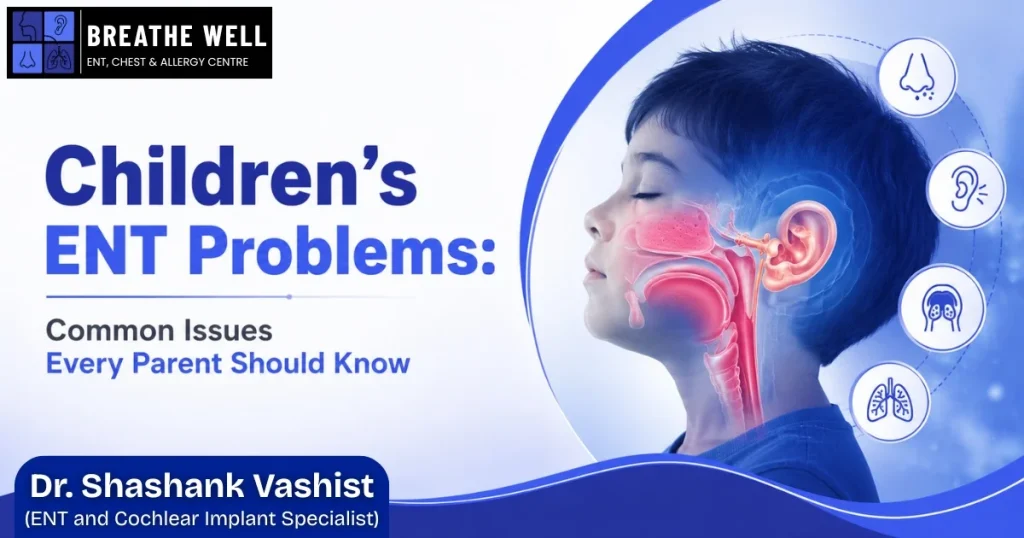
Children often catch colds, complain of ear pain or breathe noisily through their mouths. These everyday problems usually involve the ear, nose and throat. Many parents in Noida and surrounding areas look for clear answers when their child’s symptoms keep returning. Visiting the Best ENT Clinic in Noida, Breathe Well Centre can help you understand what is normal and when extra care is needed.
Why ENT Issues Are Common in Children
A child’s ear, nose and throat passages are smaller and still developing. This makes them more prone to blockages and infections. Their immune system is also learning to fight germs, so viruses and bacteria spread easily, especially in schools and playgroups.
Adenoids and tonsils are larger in young children. When these tissues swell due to infection or allergy, they can block the nose and affect hearing or breathing. Allergies to dust, pollen or food also play a big role and often show up first as ENT symptoms.
Common ENT Problems Parents Notice
Ear infections
Middle ear infections are very common after a cold. The child may pull at the ear, cry more than usual, have fever or show reduced hearing for a few days. Fluid can stay behind the eardrum even after the infection settles, sometimes affecting speech if left unchecked.
Tonsillitis and sore throat
Repeated throat infections make swallowing painful. The child may refuse food, have fever and feel tired. Enlarged tonsils can also cause snoring or restless sleep.
Blocked nose and sinus issues
Constant mouth breathing, snoring or a runny nose that lasts for weeks often points to enlarged adenoids or allergies. Children may wake up tired or have dark circles under the eyes.
Nosebleeds
Dry air, frequent nose rubbing or minor injuries inside the nose can cause bleeding. Most nosebleeds in children are not serious but can worry parents.
Hearing concerns
Fluid in the middle ear or repeated infections can temporarily reduce hearing. Parents may notice the child speaking louder, asking “what?” often or not responding when called from another room.
Allergic rhinitis
Sneezing, itchy nose, watery eyes and clear nasal discharge that come and go with seasons or exposure to dust are typical signs.
Simple Steps Parents Can Take at Home
- Keep the child’s hands clean and teach them not to put fingers in the nose or ears.
- Encourage drinking warm fluids during a cold.
- Use a saline nasal spray or drops to keep the nose clear (as advised by the doctor).
- Avoid exposing the child to cigarette smoke or strong fragrances.
- Make sure the child gets enough rest and a balanced diet.
- Never insert cotton buds or any object into the ear.
- For nosebleeds, sit the child upright, pinch the soft part of the nose for 5–10 minutes and lean slightly forward.
These measures help many mild problems settle. However, repeated or severe symptoms need proper evaluation.
When to See an ENT Specialist
Contact a doctor if your child has:
- Ear pain or discharge lasting more than a couple of days
- High fever with throat pain
- Persistent snoring or mouth breathing
- Hearing difficulty that does not improve
- Frequent nosebleeds
- Breathing difficulty or noisy breathing
- Speech delay or unclear speech
Early assessment prevents complications such as hearing loss, sleep disturbance or poor school performance.
At Breathe Well Centre, Dr. Shashank Vashist provides careful examination and parent-friendly explanations so families understand the condition and the treatment plan. Most childhood ENT problems respond well to simple medicines, allergy control or short procedures when needed.
Looking After Your Child’s ENT Health
Most children outgrow many of these issues as their immune system matures and the size of adenoids and tonsils reduces. Regular check-ups during the growing years help catch problems early. Good hygiene, timely treatment of colds and managing allergies go a long way in keeping ears, nose and throat healthy.
If your child is facing recurring ear, nose or throat troubles, seeking guidance from an experienced specialist brings peace of mind. Visit Breathe Well Centre and consult the Best ENT Specialist Near you in Noida, Dr. Shashank Vashist for clear advice and gentle care tailored to children.
Frequently Asked Questions
Many children experience one or two ear infections in the first few years of life, especially after colds. Frequent infections (more than three in six months) need evaluation.
Occasional soft snoring during a cold is common. Loud, regular snoring with restless sleep or mouth breathing should be checked, as it may be linked to enlarged adenoids or tonsils.
Yes. Allergic swelling in the nose can block the tube that connects the nose to the ear, leading to fluid build-up and temporary hearing issues.
Most nosebleeds stop with simple pressure and are not serious. See a doctor if bleeding is frequent, heavy or lasts more than 20 minutes.
No. Surgery is considered only when infections are very frequent, breathing is affected during sleep or other treatments have not helped. Many children improve with time and medical care.